Emma and Ian’s second date
One DayEmma Morley and Ian Whitehead’s second date is the first occasion on which their growing attraction becomes an explicitly mutual intimacy. What begins as another evening shaped by Ian’s jokes and Emma’s reservations changes when she asks him to stop performing: his account of why he depends on laughter allows her to see him differently, and the date culminates in their first kiss and an invitation to stay the night.
Context and Expectations
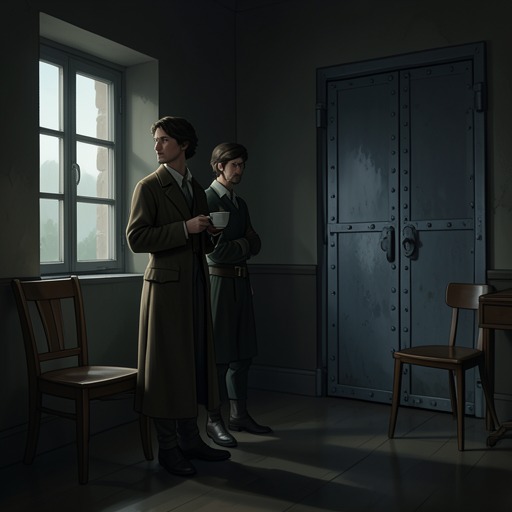
Ian waits alone at a table for two at Forelli’s in Covent Garden, checking his watch and interpreting his lateness as part of the game of dating. Even the meal involves calculation: he dips ciabatta in olive oil and studies the menu according to what he can afford. His romantic confidence sits beside economic and professional uncertainty. His comedy career has not brought the recognition he hoped for; he keeps trying different kinds of material and performing wherever he can, while working in an electronics shop to leave his evenings free for gigs.
Their first date had already established the contrast between Ian’s distinctive tastes and Emma’s willingness to meet him on his terms. He took her to see Evil Dead III, The Medieval Dead, rather than the more conventional choice she had expected, then treated the cinema’s concessions as the beginning of a three-course meal. Emma had found his relish for horror and salty food unusual, but enjoyed herself more than anticipated. His attentiveness also registered: he changed sides on the pavement to protect her from a runaway bus, and they talked about films, comedy, and whether graphic novels could have the depth of Middlemarch. That evening left her seeing him as protective and knowledgeable, while also understanding that he wanted more than friendship.
The Performance Becomes Visible
At the second date, however, Ian’s comic reflex starts to interfere with the very closeness it is meant to create. When Emma’s polite laugh prompts him to launch into another riff, she tells him plainly that he does not have to slip into his act. She distinguishes being funny from being present: their meeting is not an improv performance, she says, but a chance to talk and listen. Ian looks hurt, and Emma regrets the sharpness of her intervention, reaching across the table to take his hand. The exchange makes the date’s central tension concrete: she wants an unforced encounter, while he has learned to treat laughter as a way to hold a room.
Ian answers not with another joke but with an explanation of how that habit began. At school, he says, he was not especially bright, handsome, or popular; when people laughed at something he said, he seized on the feeling. Humour offered a role to someone who thought he had little else to recommend him, until not being funny began to seem like being nothing at all. As he speaks, he looks down and makes a small pyramid out of crumbs on the tablecloth. The gesture and the confession expose the insecurity underneath his stage persona without turning it into a simple punchline. His suggestion that Emma may understand what it means to put on an act also shifts the conversation from a criticism of him toward a point of recognition between them.
From Recognition to the First Kiss
The change in tone alters Emma’s judgment of Ian. After laughing naturally, she finds that his face seems decent and properly masculine rather than merely awkward or less attractive than the polished young men she might have expected to want. She anticipates that he will try to kiss her once the bill is paid and decides that she will let him. Yet it is Emma who closes the distance: she puts her hands on his shoulders and rises onto her toes to kiss him. She jokes about the taste of blackberries and vanilla, though the actual flavours are parmesan and alcohol; the mismatch keeps the moment warm and imperfect rather than transforming it into a polished romantic tableau. Ian laughs into the kiss and appears close to tears with gratitude, while Emma is pleased that she has made the gesture.
The kiss is therefore more than a reward for Ian’s persistence. It follows the moment when he stops trying to manufacture amusement and lets Emma see the fear that his humour conceals. Her attraction becomes an action she chooses, not simply a response to his comic charm. Ian then solemnly tells her that she is the Bollocks, and Emma answers with affectionate teasing before suggesting they go back to his place. Their banter remains part of their connection, but it now follows a candid exchange instead of replacing one.
The Night’s Hesitation
The date’s intimacy does not settle what Emma wants next. At 11:52 p.m., she checks the time while standing near King’s Cross, where a Tube train rumbles beneath her feet. Going home appears straightforward: a short walk to the station, a westbound train, and the prospect of reaching her flat before half past midnight. But she imagines the other end of that journey—the empty flat, wet clothes, a spinning ceiling, and the regret of being alone—and weighs it against the possibility of warmth and affection with Ian. The scene gives her decision a physical and practical setting rather than treating the kiss as an automatic promise of sex or a relationship.
Ian offers to walk her to the station, then tentatively asks whether she might stay over and sleep it off, specifying that they could simply cuddle or even lie rigid with embarrassment. The awkwardness of the proposal preserves the uncertainty between them: he offers closeness while trying not to presume what she will accept. The date’s decisive movement is thus from performance toward a more vulnerable kind of contact, but its ending remains a question of choice rather than a guaranteed romantic resolution. The first kiss and the invitation establish the possibility of intimacy; Emma’s hesitation keeps that possibility provisional.